We Build, Fix, Automate and Scale Software for Founders
Have an app idea, a half-built product, or a business process you want to automate? Lexidome helps you turn it into real software your users can use, trust, and pay for — without needing to become technical yourself.
Founder Conversation

Who we help
Built for founders who need more than just developers
Most founders do not need random code. They need a clear product plan, reliable execution, honest technical guidance, and a team that understands what it takes to launch real software.
I have an idea but no tech team
You know the product you want to build, but you are not sure where to start. We help you plan the first version, design the user experience, build the product, test it, and launch it.
My software is broken or unfinished
You already paid developers, but the product is buggy, slow, incomplete, or hard to launch. We audit the code, fix what matters, stabilize the system, and help you move forward.
I have a product and want to improve it
Your product works, but now you need new features, AI, automation, payments, mobile apps, dashboards, performance improvements, or ongoing engineering support.
I need a reliable engineering partner
You are an agency, consultant, or product team that needs senior development support behind the scenes. We help you deliver client work without hiring a full in-house team.
Founder-friendly product planning
Before we write code, we make the path clear
The biggest risk for a founder is not just bad code. It is building the wrong thing, hiring the wrong people, or spending months without a usable product. Our first job is to help you understand what should be built, what can wait, what it may cost, and what has to be true before launch.
We understand the idea
We learn what you are building, who it is for, how users will use it, and what the first useful version should include.
We simplify the technical decisions
You do not need to choose every tool or architecture. We explain the tradeoffs in plain language and recommend the safest path.
We build toward launch
We focus on the product version that can reach real users, collect feedback, and grow without creating unnecessary technical debt.
Simple explanations
Technical terms explained in founder-friendly language
Founders should not need an engineering background to make good product decisions. Here are clear definitions for common software terms used in MVP development, SaaS product planning, AI integration, and custom software projects.
Quick tip: if any term still feels unclear, describe your product idea in plain language. We will translate the technical path into practical next steps.
- What is an MVP?
- An MVP is the first useful version of your product. It includes the most important features needed to test the idea with real users without spending months building everything at once.
- It helps founders launch faster with less risk.
- What is SaaS?
- SaaS means software people use online, usually through a subscription. Examples include dashboards, CRMs, client portals, booking platforms, analytics tools, and business software people access through a browser.
- It creates predictable recurring revenue potential.
- What is an API?
- An API is a connection between two pieces of software. For example, your app may connect to Stripe for payments, WhatsApp for messages, Google Maps for locations, or a CRM for customer data.
- It keeps your tools connected instead of manual copy-paste.
- What is a backend?
- The backend is the behind-the-scenes part of your software. It handles user accounts, data, payments, permissions, notifications, and other things users do not always see but rely on every day.
- It determines your product's speed, security, and reliability.
- What is AI automation?
- AI automation means using AI to help with tasks like answering questions, summarizing documents, classifying leads, writing drafts, extracting data, or helping users make faster decisions.
- It saves team time and improves response speed.
- What does production-ready mean?
- Production-ready means the product is prepared for real users. It has testing, security checks, deployment, backups, monitoring, and a plan for fixing issues after launch.
- It reduces costly post-launch failures and downtime.
Still not sure what you need? Talk on WhatsApp.
Core services
Choose the path that matches where you are now
Whether you are starting from an idea, rescuing a broken product, adding AI, or scaling something that already works, Lexidome can meet you at the right stage.


Looking for web apps, mobile apps, QA, DevOps, integrations, or extensions? Browse the full services index.
For idea-stage founders
From idea to launch with a structured product sprint
A product sprint is a focused process for planning, designing, building, testing, and launching the first useful version of your software. It helps you avoid random development, unclear scope, and months of wasted work.
Included
- Product discovery and feature planning.
- User flows and UI/UX design.
- Web app, mobile app, dashboard, or platform development.
- User accounts, database, payments, admin panel, and integrations if needed.
- Testing, deployment, and launch support.
- Clear handoff and next-step roadmap.
Already built something, but it does not work the way it should?
If your product is buggy, slow, incomplete, or hard to launch, you do not always need to start over. We first audit what exists, find the highest-risk issues, fix the critical paths, and help you move toward a stable product.
Common rescue situations
- A previous developer disappeared.
- The app crashes or breaks during normal use.
- Features are unfinished or unreliable.
- The code is difficult to understand or maintain.
- Deployment is messy or unsafe.
- The product is too slow for real users.
- You are afraid to launch because something may break.
Add AI and automation where they create real value
AI should not be added just because it sounds impressive. We help you identify where AI or automation can save time, improve user experience, reduce manual work, or create a stronger product.
Examples
- AI assistants that answer questions from your data.
- Chatbots for customer support or lead qualification.
- Document summarization and data extraction.
- CRM and WhatsApp automation.
- Lead routing, reminders, and follow-up systems.
- Dashboards that summarize business activity.
- Smart workflows that connect multiple tools.
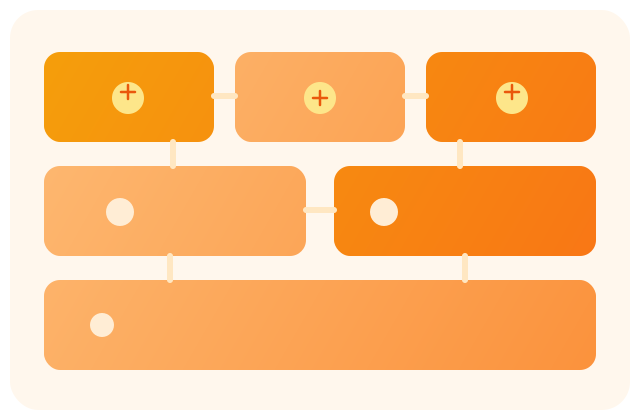
When it makes sense, we pair AI features with reliable automation so your team spends less time on repetitive work and your users get faster outcomes inside your product.
Selected work
Products we have built, improved, and launched
Founders do not just need screenshots. They need to see the problem, the product decision, the features built, and the result. Each case study should tell that story clearly.
View Our Work
Lexidome Founder Dashboard Product
Internal product that helps founders track growth KPIs, roadmap, and sprint health in one place.

Subscription Billing SaaS Rebuild
Modernized billing SaaS with modular architecture, analytics, and stronger release confidence.

Waltax - Best GST and ITR Management

Niche Services Marketplace Launch
Delivered MVP marketplace with payment flow, provider onboarding, and admin moderation.

Internal Ops Automation Suite
Cut repetitive operations with AI-assisted workflow automation and real-time SLA tracking.
We build our own products too
We understand product decisions because we make them ourselves
Lexidome does not only build software for clients. We also build our own SaaS products and tools, which means we understand roadmap decisions, user feedback, bugs, payments, dashboards, support, and long-term maintenance from the founder side too.
A clear process from first call to launch
- 1
Understand the goal
We learn what you are building, who it is for, and what success looks like.
- 2
Plan the first version
We define the must-have features, what can wait, and the safest launch path.
- 3
Design the experience
We map user flows and design screens that make the product easy to use.
- 4
Build in focused phases
We develop the product in clear milestones so progress is visible.
- 5
Test before launch
We check important user flows, performance, security basics, payments, and deployment.
- 6
Launch and improve
We deploy the product, support the launch, and help plan the next version.
Not just a demo. A product prepared for launch.
A product that looks good in a demo can still fail when real users sign up, pay, upload data, or use it every day. We build with launch readiness in mind so your product has a stronger foundation from day one.
- Important user flows tested before launch.
- Payment and account systems checked carefully.
- Admin tools for managing users, content, and support.
- Deployment process set up properly.
- Basic security and permission checks.
- Backup and monitoring recommendations.
- Clear documentation and handoff.
Tools we use behind the scenes
Modern technology, explained simply
You do not need to choose the technology stack yourself. We select tools based on your product goals, budget, timeline, and future hiring needs. We use proven technologies that make your product easier to maintain and grow.
Frontend
The part users see and interact with.
Backend
The behind-the-scenes system that manages data, accounts, payments, and business rules.
Mobile
Apps for iOS and Android.
Database
Where your product safely stores user and business data.
AI
Tools for chat, document processing, recommendations, summaries, and smart workflows.
Cloud and deployment
Where your product runs online.
Automation and integrations
Tools that connect your product to payments, CRM, WhatsApp, email, SMS, calendars, maps, or other systems.
Founder Engineering Insights
Simple software guides for founders who are building real products
You should not need a technical background to make better product decisions. Our guides explain software, SaaS, MVPs, AI, automation, app development, and product rescue in clear founder-friendly language.
All articles

Founder proof
Work designed for products that have to work in production
Real founder feedback in two formats: quick video stories and written reviews from teams we supported across SaaS, automation, and product engineering delivery.
Video + text testimonials
Common questions from founders
Yes. Many founders come to us with a business idea, product vision, or broken project but no technical team. We help you understand what to build first, what technical decisions matter, and how to move toward launch step by step.
An MVP is the first useful version of your product. It focuses on the most important features needed to test the idea with real users. A full product usually includes more advanced features, automation, analytics, admin tools, and scaling improvements.
That is normal. You can explain the idea in simple words. We will help you decide whether the first version should be a web app, mobile app, SaaS platform, dashboard, automation system, or something else.
Yes. We start with a software rescue audit to understand the current code, bugs, deployment setup, database, and risks. Then we recommend whether to fix, refactor, rebuild parts, or create a staged rescue plan.
Yes. Your project should be set up so you own the code, accounts, assets, and product infrastructure. Ownership and handoff terms should be clearly written into the agreement.
Timeline depends on scope, complexity, design, integrations, and how ready the idea is. Many first product sprints can be planned around a focused launch window, but we give a realistic estimate after understanding the product.
Yes. We can continue with feature development, bug fixes, performance improvements, AI features, automation, mobile apps, monitoring, and ongoing product engineering support.
Have an idea, broken product, or software you want to improve?
Tell us where you are now. We will help you understand the next best step — whether that is planning your first version, rescuing a broken build, adding AI or automation, or scaling an existing product.
Clear next steps. Founder-friendly explanations. No technical knowledge required to start.